Combo Brows or Microblading? Patchy Brow Hair Decides It
Combo brows are microblading plus a light, strategically placed amount of machine shading. I add that shading when your brow hair is thick and coarse but genuinely patchy, or when you want more drama than strokes alone deliver. Microblading on its own is where I start most people, because it ages the most naturally and keeps your options open.
I need to correct something before you read any further, because almost every guide you’ll find on this has it backwards: your skin type does not pick your technique. It picks your aftercare. I’ve been doing this over ten years, brows only, and I have never once chosen a technique off someone’s T-zone.
The second thing worth clearing up: “combo brows” is not a superior, upgraded version of microblading, and it isn’t a separate technique sitting beside it either. Combo IS microblading, with a light layer of shading added on top of the strokes. That distinction changes what you’re actually deciding — which is not “which of these two things,” but “does anything get added to the strokes, and how much.”
Here’s how I actually think about it when I’m talking to a new client.
What Microblading Actually Does
Microblading uses a manual tool with ultra-fine needles arranged in a row to create individual hair-like strokes in the skin. Each stroke looks like a real brow hair — it has dimension, direction, and a natural appearance that can be nearly indistinguishable from your actual brow hair.
The result is a realistic, “I just have really good brows” look. If you want something that looks like you woke up with naturally perfect brows — defined but not heavy, shaped but not drawn-on — microblading is likely the right fit.
It’s particularly effective for:
- Brow hair that’s sparse, fine, or light — strokes have room to sit, and they read as real hair instead of competing with heavier texture already there
- People with naturally good brow texture who just want to add density or shape
- People who prefer the most natural-looking result possible, and who care what it looks like three years out, not just three weeks
- Anyone who isn’t certain yet — starting here keeps every option open, and I’ll explain further down why that isn’t a small thing
- People who want a look that can be described as “barely there but perfectly shaped”
What Combo Brows Actually Do
Combo brows (also called combination brows) are microblading with a light, strategically placed amount of machine shading added to it. The hair strokes are still drawn by hand, one at a time. The shading goes exactly where it’s needed and nowhere else.
That word — placed — is the part that usually gets skipped. Shading isn’t a blanket laid over the whole brow. If there’s a bare stretch between two dense patches of coarse hair, that stretch gets shaded. If the tail runs out of hair halfway along, the tail gets shaded. The front keeps its hair strokes, so the brow holds its soft, feathered edge exactly where your face reads it most.
The result is more dimensional and more defined than strokes alone. How much more is a dial, not a switch — “dramatic” is set entirely by how much shading goes in, and I set it light unless you ask me not to.
Combo brows work well for:
- Brow hair that’s thick and coarse but genuinely patchy — a hand-drawn stroke can’t hold its own beside a coarse hair, and a bare spot surrounded by heavy texture still reads as a bare spot
- People who naturally fill in their brows every morning and want that density built in
- People who want more definition than hair strokes alone deliver, at whatever level of “more” they choose
What Each Technique Looks Like Healed
This is where most comparison guides miss the mark. The difference between combo brows and microblading is most visible not on Day 1 but at the 6-week healed mark.
Healed microblading looks like natural brow hair — individual, separated strokes with visible skin between them. The texture reads as hair, not as makeup. If you look at someone’s healed microblading and can tell it’s there, it was either done too dark, too thick, or mapped incorrectly.
Healed combo brows have a different visual quality. The stroke texture stays wherever strokes were the right answer; the shaded areas heal as a soft, diffused gradient that creates density without individual stroke visibility. Where those shaded areas fall depends entirely on where your gaps were — that’s the placement I described above, so no two combo brows heal to quite the same map. It reads as a more “done” brow — defined, full, polished — with a natural quality still underneath it.
The healing process itself is similar for both. Days 1-3 are darkest. Days 4-10 involve peeling that can look patchy. Week 6 is the true result. Combo brows during healing can appear slightly more saturated during the peeling phase because of the shading component — but both techniques arrive at a healed result that is softer and more natural-looking than the immediate post-appointment appearance.
Give it three years and the gap widens rather than closes, and saturation is the reason: the more pigment sitting in the skin, the less it reads as individual hair over time. That’s not an argument against shading. It’s the trade you’re making when you add it, and you deserve to know you’re making it.
What Skin Type Actually Changes
If you have oily skin, this is the section you came here for, so let me be direct about it. Skin type is real. It changes something real. It just doesn’t change the thing everyone says it changes.
Microblading deposits pigment in fine strokes just below the surface of the skin. Skin that produces more oil breaks that pigment down faster, so the strokes soften sooner and the edges blur a little earlier than they would on drier skin. Drier skin holds crisp strokes longer. All of that is true, and I’d never argue with any of it.
What it changes is your aftercare and when you come back — not what I pick up. Skin that runs oilier means a stricter first ten days, a lighter hand with product, and a refresher that lands closer to the twelve-month mark than the eighteen. That’s a maintenance conversation. It is not a technique conversation, and treating it as one is how people end up with machine work on their face that nobody ever explained to them.
The reason the industry converts it into a technique rule is mechanical, and that mechanism is exactly why I don’t follow it. A machine implants more pigment than a manual tool does — the rate of implantation is simply different — so machine work lasts longer. Lasting longer and looking like your own brow hair are two different goals. On a face that has to live with the result for years, I’m not trading the second for the first on the strength of a T-zone.
So when someone tells you your skin decides this: your skin decides how you’ll care for your brows and how often you’ll see me. Your brow hair, and how much drama you’re after, decide the rest.
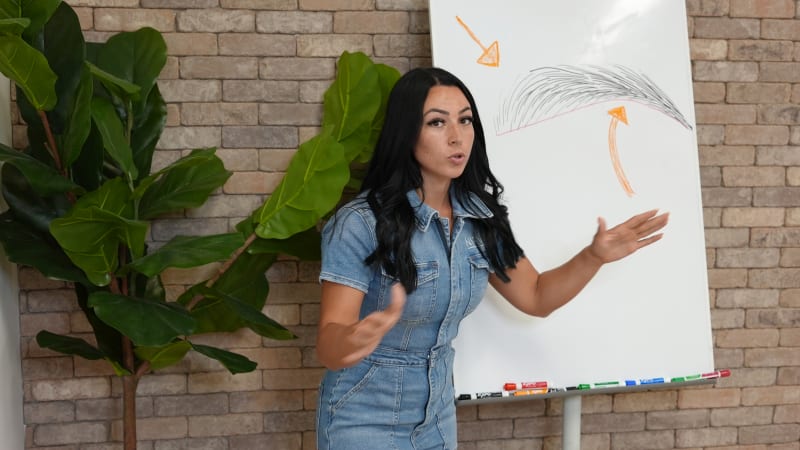
I use the Microblading Comparison Chart tool during consultations to help clients visualize the difference. It’s also useful if you’re trying to narrow down your options before booking.
Client Types That Suit Each Technique
With skin type off the table as the decider, what’s left is the actual brow in front of me and what you want it to do.
Microblading tends to fit:
- People who rarely wear brow makeup and want “natural but shaped” — their baseline is already pretty good and they want subtle enhancement
- Brow hair that’s sparse, fine, or light — there’s room to place strokes, and they blend rather than compete with what’s already growing
- People who are new to PMU and want to start conservatively, with the option to go fuller later
- Clients whose priority is that it still looks like their own hair years from now, as their face keeps changing
Combo brows tend to fit:
- Brow hair that’s thick and coarse but genuinely patchy — the gaps are the whole problem, and one hand-drawn stroke can’t match the weight of a coarse hair sitting right next to it
- People who fill in their brows every single day and feel uncomfortable without that definition
- People who want more drama than hair strokes alone give them — and who understand that “more” is a dial you and I set together, not a preset
There’s significant overlap, and the overlap is the point: a client with coarse, patchy hair who wants the most natural possible result might still be a microblading-only client, and I’d tell her so. What I won’t do is decide it before you’ve seen your own microblading finished on your own face.
Can You Switch From One to the Other?
Yes, but the direction matters.
Adding shading to existing microblading (converting to combo): entirely possible, and I do this regularly at touch-up appointments for clients whose microblading has healed in a way that shows the individual strokes more than they’d like. The shading fills in density without removing or covering existing work.
Removing shading to go back to pure microblading: this isn’t really possible. Powder shading, once healed, is there. It fades over time, but you can’t selectively remove it while preserving the strokes. If someone had combo brows and decides they want a more natural, stroke-only look, the best path is to let it fade naturally and then rebuild.
And it goes further than most people are told, so I’d rather you hear it from me before you decide anything: once shading is in a brow, every touch-up and every annual refresher after it has to be shading too. Manual strokes won’t lay over a saturated brow. That isn’t a phase you wait out — it’s how that brow gets maintained for as long as you keep it. The same is true of machine work done anywhere else, which is why I ask about your history before I plan anything.
This is one reason I err toward starting people at microblading if they’re uncertain — it’s easier to add definition than to take it away.
Pricing and Touch-Up Differences
At my studio, both microblading and combo brows are $650 for the initial session. The required touch-up at 6-8 weeks is a separate $150 — so your complete first-year process is $800 either way. I tell you both numbers at your consultation, before you book anything.
The annual refresher for both is $300, whenever you decide you want one.
The technique is more complex for combo — the shading component adds time to the session. But I don’t charge more for the added complexity. The goal is the best result for the client, and that means recommending the right technique regardless of which takes more time.
Both techniques eventually need a refresher to maintain color and density — that one is genuinely optional, unlike the 6-8 week touch-up. How soon depends on your skin type and how you care for your brows between sessions. Clients with oilier skin or those who spend significant time in the sun may need their refresher closer to the 12-month mark. Clients with drier skin who keep their brows out of the sun usually make it to eighteen months. Dry skin doesn’t stretch the window past that, though — it lands in the same place normal skin does, which is the opposite of what most skin-type charts will tell you. See why microblading fades for the full breakdown.
Side-by-Side Comparison
| Microblading | Combo Brows | |
|---|---|---|
| What it is | Hand-drawn hair strokes, manual tool only | The same hair strokes, plus a light placed amount of machine shading |
| Look | Natural hair strokes | Hair strokes with added depth where it’s needed |
| Definition level | Natural to moderately defined | A dial you set — subtle through bold |
| Fits brow hair that is | Sparse, fine, or light | Thick and coarse with real gaps in it |
| What your skin type changes | Aftercare and refresher timing | Aftercare and refresher timing |
| How it ages | Reads as real hair the longest | Holds density longer, reads less like hair over time |
| Longevity | 12-18 months | Slightly longer on average |
| Initial session | $650 | $650 |
| Touch-up at 6-8 weeks | $150 | $150 |
| Annual refresher | $300 | $300 |
| Ideal if you… | Want a hair-like, natural result that stays that way | Have real gaps in coarse hair, or want more definition |
| Can you change your mind later? | Yes — shading can be added | No — shading is a one-way door |
What About Powder Brows?
You might be wondering where powder brows fit in. I cover them in detail in Powder Brows: Everything You Need to Know, but the short version:
Powder brows skip the hair strokes entirely and create a fully diffused, filled-in look that resembles brow powder or tinted gel. No individual strokes — just a clean, soft gradient from the front of the brow to the tail.
Powder brows sit at the far end of that spectrum: maximum definition, no hair-stroke texture at all, and the most pigment of the three. Combo brows sit between microblading and powder brows — you get some of both. For clarity, microblading and combination brows are the two I offer; I’m describing powder brows here so you can place them, not selling them to you.
And if you’re also considering nano brows (machine-created hair strokes), check out the comparison in my nano brows vs microblading guide.
My Honest Take
When clients ask me which I prefer, the honest answer is that I do lean, and I’d rather say so than perform neutrality. Where microblading alone fits the brow in front of me, that’s what I do — because natural is non-negotiable for me, because strokes alone age the most naturally of anything I could put on your face, and because it’s the only one of the two that leaves the door open in both directions.
That is not the same as saying microblading is always the right call. It isn’t. Coarse hair with real gaps in it genuinely does better with shading placed into those gaps, and a client who wants more definition than strokes give her should have it. I’d just rather you arrive there on purpose, having seen your own finished microblading first.
I’ve microbladed brows for a woman who’d been penciling hers on since 2003 — somewhere between the skinny-brow years and now, the hair just stopped coming back — and strokes alone were exactly right, because there was room to place them. I’ve done combo brows for someone whose brow hair was thick as anything and still had a bare stretch through the middle of one brow that no pencil ever fixed; strokes alone would have left that stretch looking like what it was. Both, done for the right reason, produce results that make people feel better about themselves.
What I won’t do is push you toward one option because it’s trendier or easier to sell. The consultation exists to figure out what’s actually going to work — for your skin, your lifestyle, and your aesthetic.
During your free consultation at my studio in Shorewood, IL, I’ll assess your skin type, look at your existing brow hair, talk through what you want, and give you a specific recommendation with an explanation for why. No pressure, no upsell — just an honest opinion based on 10+ years and 3,500+ treatments.
Common Questions I Get at Consultations
“Everyone tells me oily skin rules out microblading. Is that true?”
No. Oil changes how fast pigment breaks down, which changes your aftercare and how often you come back for a refresher. It doesn’t change what I pick up. If your skin runs oilier, expect a stricter first ten days, a lighter hand with product, and a refresher closer to twelve months than eighteen — and expect me to tell you that plainly at your consultation instead of quietly steering you toward machine work you never asked about.
“My friend got combo brows and they looked too heavy. Should I be worried?”
Heavy combo brows happen when the shading component is overdone or the color is applied too dark. Proper combo technique creates a shaded effect that reads as depth and dimension, not as a drawn-on filled-in brow. The difference is in the skill and the color selection — not the technique itself. Ask to see the artist’s healed combo brow photos, not just fresh photos.
“Can I see what each would look like before committing?”
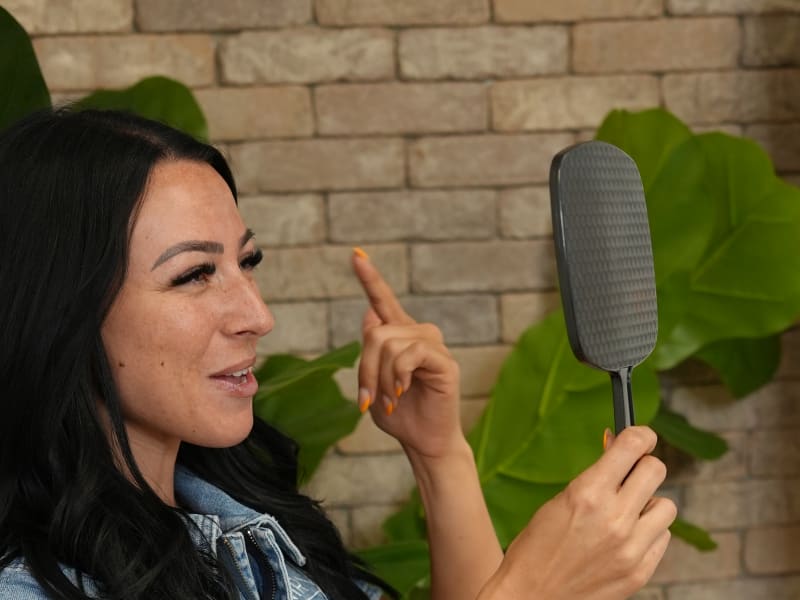
During the design phase of your appointment, before any pigment is placed, I map the brow shape and show you the planned look with pencil. That gives you a clear preview of shape. But here’s the better answer to your question: I complete all of the microblading first, and you look at your finished brows in the mirror before anyone decides whether shading gets added. You’re not choosing between two descriptions on a page — you’re choosing after you’ve already seen one of them on your own face.
How Longevity Differs Between the Two
Both techniques require the same two-session process — an initial appointment and a touch-up at 6-8 weeks — but they behave differently across the 12-18 months microblading typically holds.
Microblading: The hair strokes are the only pigment in the skin. As they fade, the brows soften and the gaps between strokes become more visible. The look transitions from defined to soft, which works well until the pigment fades enough that strokes are no longer visible in certain lighting.
Combo brows: The shading layer provides a base that remains visible even as individual strokes fade. This makes the overall look hold longer before it looks sparse — clients often describe it as the brows still looking full even when the strokes themselves have softened considerably. For clients who want to maintain density with fewer touch-ups, that’s a real practical advantage — bought with the saturation trade above, which is the honest other half of the sentence.
The annual refresher ($300) rebuilds density and refreshes color for both. For a brow with shading in it, that refresher includes shading — once it’s there, that part isn’t optional.
The Final Decision Framework
If you’re still undecided after reading this, here’s the clearest version of how to choose:
Choose microblading if: your brow hair is sparse, fine, or light; natural hair-stroke texture matters most to you; you want the version that still reads as your own hair years from now; or you genuinely aren’t sure yet — this is the choice that keeps both doors open.
Choose combo brows if: your brow hair is thick and coarse but has real gaps in it that strokes alone won’t convincingly close; you fill your brows in every morning and want that density built in; or you want more definition than hair strokes deliver, at whatever level of “more” you and I settle on.
The two are not equally reversible, and that asymmetry belongs in your decision. You can add shading to microblading later. You cannot go back to strokes-only once shading is in the brow — every appointment after it has to include shading. So if you’re torn, start at microblading and keep the option. If the gaps in coarse hair are the whole problem, shading is what closes them, and that’s a good reason to choose it deliberately.
And if you’ve had microblading before that faded faster than you expected, bring that up — it tells me how your skin handles pigment, which shapes your aftercare plan and your refresher timing. It doesn’t automatically mean shading. It means it’s worth talking about.
For clients from Naperville, Joliet, Plainfield, and the surrounding Chicago suburbs — I’m at 805 W Jefferson St Ste I, Shorewood, IL. Book your free consultation at nirvanapmu.com/consultation or call (815) 302-7673. The consultation takes 20 minutes and includes a full look at your brow hair and your skin, plus an honest technique recommendation, before you commit to anything.
Studio: 805 W Jefferson St Ste I, Shorewood, IL 60404 | (815) 302-7673
See also: why microblading fades for a complete breakdown of what actually drives longevity and how technique choice intersects with skin type over time.