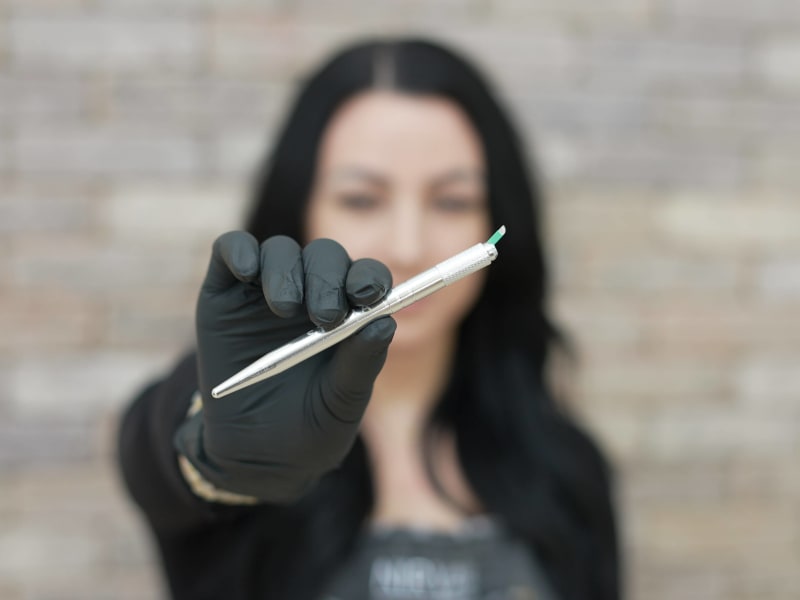
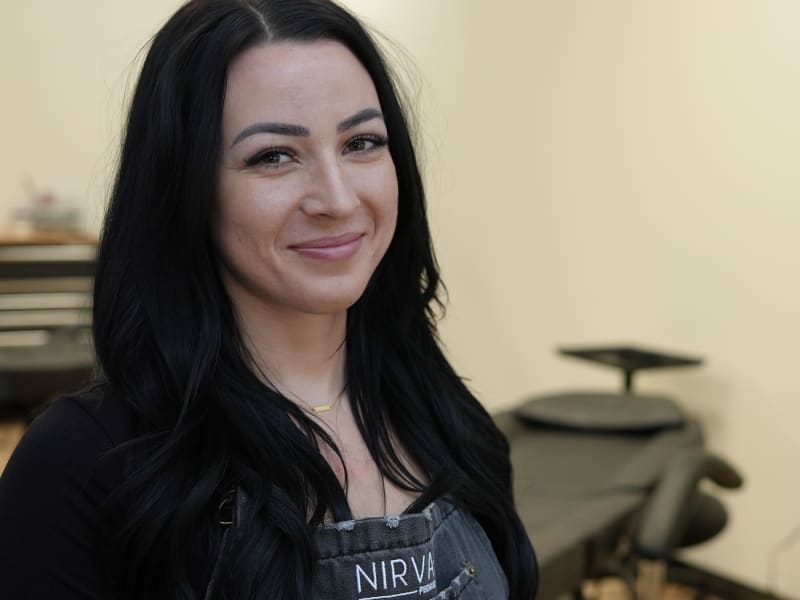
I get asked for numbers constantly—by journalists, by other artists, by clients doing their research. So I put together the most comprehensive collection of microblading statistics I could find, combined with real data from my own practice (3,500+ treatments over 10+ years at Nirvana PMU in Shorewood, IL).
This page is updated regularly. If you’re a writer, blogger, or researcher, feel free to cite anything here with a link back.
How Big Is the Microblading Industry?
The global microblading and permanent makeup market was valued at approximately $1.0 billion in 2023 and is projected to reach $1.5 billion by 2030, growing at a compound annual growth rate (CAGR) of 5.2%. The industry has seen a roughly 15% annual increase in treatments performed since 2020.
The numbers tell a straightforward story: this industry isn’t slowing down.
According to Allied Market Research, the global permanent makeup market hit $1.02 billion in 2023. Straits Research projects the broader micropigmentation market will reach $1.5 billion by 2030, driven by growing consumer demand for semi-permanent cosmetic solutions. Grand View Research attributes the growth to rising beauty consciousness and an aging population seeking low-maintenance solutions.
Key market statistics:
- $1.0 billion — global market size in 2023 (Allied Market Research)
- $1.5 billion — projected market size by 2030 (Straits Research)
- 5.2% CAGR — compound annual growth rate through 2030
- 15% annual increase in microblading treatments performed since 2020
- North America accounts for the largest market share, followed by Europe and Asia-Pacific
In my own practice, I’ve seen this firsthand. Demand has grown steadily every year I’ve been doing this, and the wait to get on my calendar has stretched out right along with it. More people know what microblading is, and more people are ready to book without needing months of convincing.
Who Gets Microblading?
Microblading clients are primarily women aged 25-45, though the fastest-growing segments are women over 50 and men. About 70% of adults say they want more defined brows, and roughly 95% of current microblading clients are female—but the male segment is growing faster than any other demographic.
The “typical” microblading client is changing. Five years ago, it was almost exclusively women in their 30s. Now I’m seeing a much broader range.
Age demographics (industry-wide):
- 25-34 — Largest segment (approximately 35% of clients)
- 35-44 — Second largest (approximately 30%)
- 45-54 — Growing rapidly (approximately 20%)
- 55+ — Fastest-growing age segment by percentage (approximately 10%, up from 4% in 2020)
- 18-24 — Smallest segment (approximately 5%)
Gender breakdown:
- Female — ~95% of all microblading clients
- Male — ~5%, but growing fastest of any segment (Grand View Research)
According to a survey cited by Fortune Business Insights, about 70% of people express a desire for more defined, fuller-looking brows. That tracks with what I see in consultations—most people aren’t coming in because they hate their brows. They just want them to look… better. More filled in. More symmetrical. More there.
From my practice (3,500+ treatments):
- Men are a small but real part of my chair time—higher than the industry average, and I wrote about why in my post on microblading for men
- The reason I hear most often is some version of “I’m tired of drawing them on every day”
- Close behind that: “I over-plucked in the 2000s and they never grew back”
- A smaller group come in after medical hair loss, from alopecia or chemo
What Does Microblading Cost?
Microblading costs between $400 and $800 nationally, with premium artists in major metros charging $600-$1,200. At my studio in Shorewood, IL, the first session is $650 and the required 6-8 week touch-up is a separate $150 — $800 for the complete process, quoted that way from the first conversation. Over two years, microblading typically costs less than what most people spend on daily brow products.
Pricing varies widely based on location, artist experience, and what’s included.
National cost ranges:
- Budget range: $200-$400 (often newer artists or Groupon deals)
- Mid-range: $400-$600 (experienced artists in smaller markets)
- Premium range: $600-$1,200 (highly experienced artists, major metros)
- National average: approximately $550-$650 (Society of Permanent Cosmetic Professionals)
Regional cost differences:
- New York / LA / Miami: $800-$1,500+
- Chicago metro (where I work): $400-$800
- Midwest / South (smaller cities): $300-$550
- Rural areas: $200-$400
Long-term cost comparison:
The average person spends $207-$379 per year on brow products (pencils, powders, gels, concealer, brushes, and remover). Over 5 years, that’s $1,035-$1,895. Microblading plus refreshers over the same period runs approximately $1,250-$1,550. The math kind of speaks for itself—and that’s before you factor in the 149+ hours per year you get back. For a detailed breakdown of your specific situation, try the Microblading Cost Calculator.
My pricing at Nirvana PMU:
- Initial session: $650
- 6-8 week touch-up: $150
- Annual refresher: $300
- Combination brows: $650
I go deeper on the ROI question in Is Microblading Worth the Cost?.
Does Microblading Hurt?

Most people rate microblading pain at 3-4 out of 10 with numbing cream applied. In my own chair, most clients land in that same mild-to-moderate range, and the most common description is “like light scratching” or “eyebrow plucking in reverse.”
Pain is the number one concern I hear during consultations. Here’s what the data actually shows.
What clients tell me, in my own chair:
- Most people land somewhere between barely-noticeable and mildly uncomfortable — very few describe it as truly painful
- Most common description: “Like eyebrow plucking in reverse”
- Zero have stopped mid-session due to pain, across 3,500+ treatments
- Touch-up pain is typically milder than the initial session
Factors that increase discomfort:
- Caffeine consumption before the appointment
- Scheduling during menstruation (higher pain sensitivity)
- High anxiety levels
- Previous retinoid use (thins the skin)
- Naturally thin or sensitive skin
I have a full deep-dive with pain comparisons, a brow “pain map,” and prep tips in The Truth About Microblading Pain.
How Long Does Microblading Last?
Microblading lasts 12-18 months for nearly everyone. Dry skin and normal skin land in the same window — they are not two different numbers. Only excessively oily skin runs shorter, around 10-12 months. Your sun habits and your skincare shelf move that date further than your skin type does.
Longevity is one of the most misunderstood aspects of microblading. It’s not permanent, and that’s actually a good thing—your face changes over time, and your brows should be able to change with it.
Longevity by skin type — a much narrower spread than you’ve been told:
- Dry skin: 12-18 months
- Normal or combination skin: 12-18 months — the same window as dry, not a longer one
- Excessively oily skin: 10-12 months (constant oil flow works pigment out of the stroke channels sooner)
“Combination” there describes your skin, not combination brows — I don’t pick a technique off anyone’s T-zone. And I say “excessively” oily on purpose: most people who tell me they have oily skin don’t, clinically, and they’ve spent months bracing for a shorter result they were never going to get.
Factors that accelerate fading:
- Sun exposure (UV breaks down pigment—SPF on your brows matters)
- Retinol, AHAs, BHAs, and other exfoliating skincare products
- Chlorine and salt water exposure
- Intense exercise (heavy sweating)
- Higher metabolism
- Iron-deficiency anemia (can affect pigment retention)
How often people actually come back:
Plan on a refresher somewhere in that 12-18 month window. That’s the honest number, and it’s the one I want in your head when you book — not a best case someone quoted you to close the sale. Strokes don’t disappear on a schedule; they soften, and the month you finally notice is different for everyone. Some people do stretch well past the window, and a few of them walk back in looking good enough that I send them home. Understand what that is, though: it’s them choosing to wait, not the pigment promising to hold. I’d rather you be pleasantly surprised at month twenty than let down at month twelve.
Key longevity facts:
- Microblading pigments are formulated to fade naturally without turning blue or gray (unlike traditional tattoo ink)
- The initial touch-up at 6-8 weeks is critical for longevity—it reinforces strokes that faded during healing
- Proper aftercare during the first 10-14 days significantly affects how long results last
For a month-by-month breakdown, see How Long Does Microblading Last?. If you want to know exactly how to protect your results, check out the PMU Aftercare Guide and the Healing Timeline tool.
How Satisfied Are Microblading Clients?

Client satisfaction for microblading performed by experienced artists exceeds 90%, according to data published in the Journal of Cosmetic Dermatology. My studio maintains a 5.0 Google rating from hundreds of verified reviews, and a good share of the people in my chair came because they liked a friend’s brows.
Satisfaction data is important because it separates the reality from the horror stories people find online.
Industry satisfaction data:
- 90%+ satisfaction rate when performed by trained, experienced artists (Journal of Cosmetic Dermatology)
- 97% of clients in a Dermatologic Surgery study said they would recommend microblading to a friend
- Satisfaction rates drop significantly with less experienced artists—experience matters more than almost any other variable
My practice data:
- 5.0 Google rating from hundreds of verified reviews (see them here)
- Annual refresher uptake: about a third — not the 90% you’ll see quoted around this industry. Nearly everyone comes back for the 6-8 week touch-up because it’s part of the process; far fewer make the yearly refresher a habit, and I’d rather say that out loud than inflate it
- Referrals are my biggest single source of new clients—someone they know already sat in my chair
- Zero malpractice claims or formal complaints in 10+ years
What clients say matters most (post-appointment survey):
By a wide margin, the answer I hear most is natural-looking results—that’s the thing people care about above everything else. After that it’s the time saved every morning, then the confidence that comes from not needing makeup to feel put-together, and finally just not having to think about their brows at all.
The satisfaction data reinforces what I see every day: when microblading is done well—with proper technique, quality pigments, and an artist who actually understands facial anatomy—people love their results. The horror stories almost always trace back to inexperienced artists, bargain pricing, or poor aftercare.
What Are the Risks of Microblading?
Serious complications from microblading are rare—less than 1% when performed by a trained, licensed professional using proper sanitation protocols. The most common issues are minor asymmetry, slight color shifts during healing, and temporary skin irritation, all of which are typically addressed during the follow-up touch-up.
I’m not going to pretend microblading is risk-free. It involves breaking the skin. But the data on actual complications is reassuring.
Complication rates (published research):
- <1% serious complications (infection, scarring, allergic reaction) when performed by trained professionals (International Journal of Dermatology)
- 3-5% experience minor color changes during healing that require adjustment at the touch-up
- 2-4% report minor asymmetry that’s corrected at the follow-up session
- <0.5% experience allergic reactions to pigment (patch testing reduces this further)
Most common issues (not “complications” per se):
- Pigment fading unevenly during healing (normal—addressed at touch-up)
- Brows looking too dark immediately after (normal—they settle 30-40% lighter than Day 1)
- Minor itching or flaking during days 4-10 (normal healing response)
Serious risk factors to watch for:
- Unsterile equipment — the biggest actual risk; always confirm single-use, disposable tools
- Unlicensed artists — licensing requirements vary by state, but Illinois requires specific certification
- Bargain pricing — according to a Groupon survey, 23% of clients who purchased discounted cosmetic treatments were unsatisfied with results
- No portfolio of healed work — fresh photos can mask poor technique
My safety protocols:
- Single-use, disposable tools for every client
- Medical-grade sanitation
- Licensed and insured in Illinois
- Patch testing available for clients with sensitive skin or allergy concerns
- 10+ years and 3,500+ sessions with zero infection incidents
For a more detailed look at risks and how to evaluate any artist’s safety standards, read Microblading Risks & Safety. Not sure if you’re a good candidate? Take the Candidate Quiz—it covers medical history, skin type, and lifestyle factors in under two minutes.
Quick-Reference: Microblading by the Numbers
Here are the key statistics in one place for easy reference:
| Statistic | Data Point |
|---|---|
| Global market size (2023) | $1.0 billion |
| Projected market size (2030) | $1.5 billion |
| Market CAGR | 5.2% |
| National cost range | $400-$800 |
| Typical longevity | 12-18 months |
| Client satisfaction (experienced artists) | 90%+ |
| Serious complication rate | <1% |
| Female client percentage | ~95% |
| Primary age group | 25-45 |
| Annual brow product spend (average) | $207-$379 |
| Hours spent on brow routine per year | 149+ |
Sources
- Allied Market Research — Permanent Makeup Market Report (2023)
- Straits Research — Global Micropigmentation Market Forecast
- Grand View Research — Cosmetic Tattoo Market Analysis
- Fortune Business Insights — Beauty Industry Consumer Survey
- Journal of Cosmetic Dermatology — Client Satisfaction in Micropigmentation
- International Journal of Dermatology — Complications in Cosmetic Tattooing
- Dermatologic Surgery — Semi-Permanent Makeup Outcomes Study
- Society of Permanent Cosmetic Professionals — Industry Pricing Data
- Groupon — Consumer Satisfaction Survey on Discounted Cosmetic Procedures
- Sarah Delaney / Nirvana PMU — Practice data from 3,500+ treatments (2016-2026)
This page is a living document. I update it as new research comes out and as my own practice data grows. If you’re a journalist, blogger, or researcher and want to cite these statistics, just link back to this page.
Have questions about microblading? Contact me or book a free consultation. I answer every message personally.